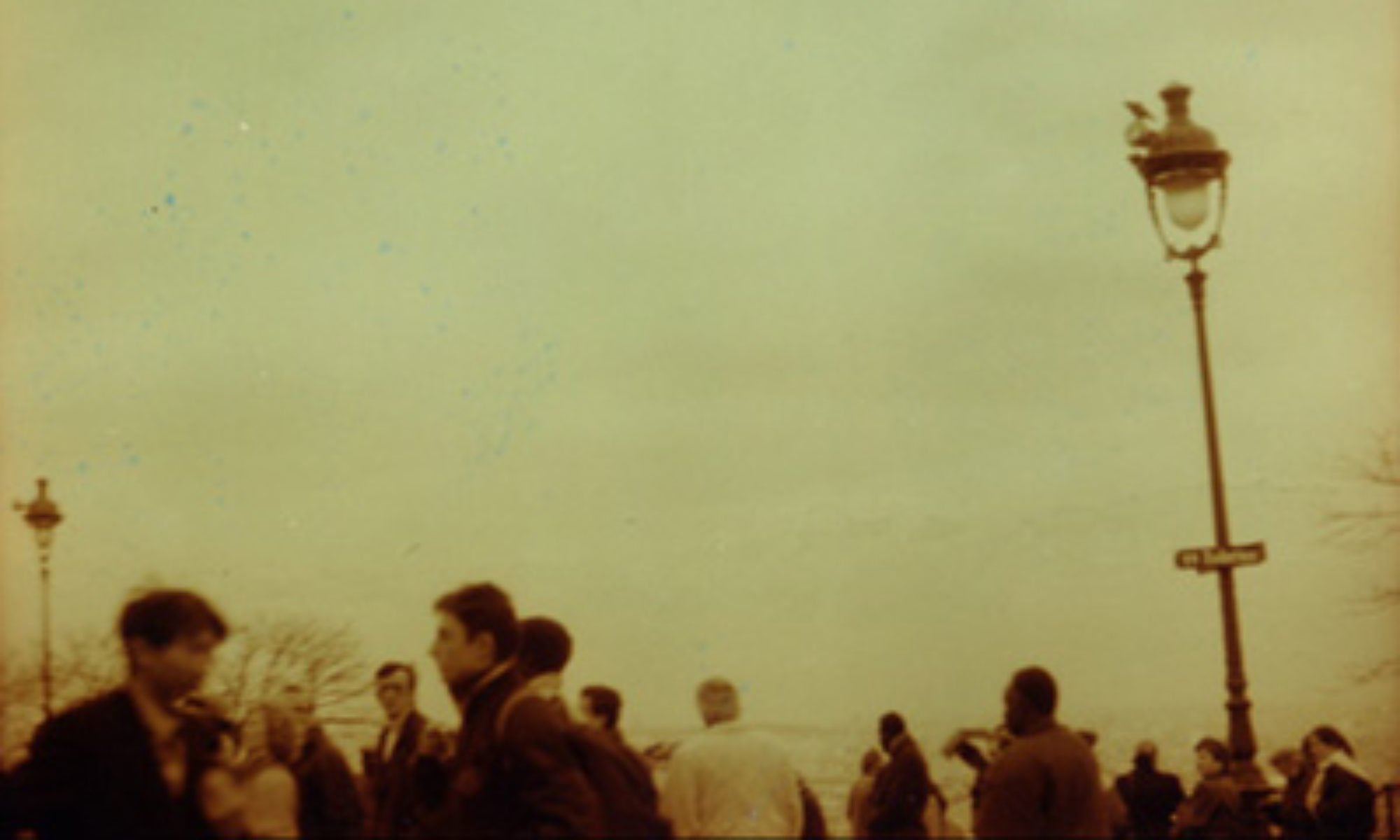
“It would be easier,” I remark, “To have lunch with Jacques Chirac.” We are standing outside the Pilier Sud, at the entrance to private elevator to Restaurant Jules Verne. Our way is blocked by a pleasant but stern young man, clad in all black, with a radio headset. It is a near impossibility to make a reservation at Jules Verne, the luxury restaurant on the second tier of the Tour Eiffel.
“Three months in advance” is their standard reply…and even then…I finally had a friend who works for the French Tourist Office in LA make the reservation…to her slight annoyance, as even for her it required multiple phone calls and faxes. It’s somewhat ridiculous…Le Grand Véfour, Le Cinq—great, three star restaurants—booked with a simple fax on our last trip to Paris. Anyway, even after going to such great lengths to extract a reservation, and a fax from the restaurant confirming such reservation, the Jules Verne insists that you reconfirm the reservation the day before. OK, slightly annoying, but not unheard of. Except that they never answer their telephone. Call, call, and call again, and all you get is a multi-lingual message telling you that all lines are busy and please try again in a few minutes. At the prices they charge, you’d think they could hire someone to answer the phones…or outsource it to a call center in India or something. Finally we sent them a fax. But, of course something has gone astray…our table has been canceled (and given to who I wonder, considering the difficulty of making a reservation and the impossibility of reaching them by phone. Have they a list of stand-ins at the ready?) Calls are made from the elevator desk to the restaurant upstairs; someone comes to confer with us…I wave my confirmation fax (bearing the imprint of the French Tourist Office) and Logan explains the multiple unanswered phone calls. Still the young man in black bars our entry to the private elevator lobby, snicker though he did at my comment about lunch with Jacques Chirac. Clearly this is a commonplace occurrence. Someone in authority explains that they had tried to call our hotel, unsuccessfully, that morning, and then—finally behaving in the manner one expects from such a restaurant—says, but of course we will take care of everything, please come up…
From that point on, all is pleasant. A sweet boy lifts us to the second étage in one of the tower’s uniquely slanted elevators; we can see the young and the vigorous clambering up and down the stairs as views of Paris flash in and out of sight between the steel girders. We are offered an aperitif in the bar, but already they have a table ready for us. It’s a small table…too small really for the theater of food the restaurant requires, but it is right at the window, on the best side of restaurant. All of Paris is below our table: Sacre-Coeur on its hill, the Place de la Concorde, the Arc de Triomphe, the roofs of the Madeleine and the Opera, the expanse of the Louvre, and, in the distance, the distinctive towers of Notre Dame and the brightly colored tubes of the Pompidou Center. Directly under us, on the platform below the restaurant, tourists admire the view. It is spectacular, as promised. Inside, the restaurant is all black and grey and leather—very eighties. It seems a bit, well, too eighties, though in mint condition. Logan admires the china, white with black geometric accents, eighties too, but handsome. I find the black stemmed wineglasses less successful. We have glasses of Veuve Cliquot vintage rose (€29 a glass!) Logan promptly knocks his over—25 euros spilling into my plate and lap—fortunately protected by my napkin. Fortunately our only mishap. Service is efficient, professional, but no better than most Paris restaurants. Food is fairly excellent. The à la carte menu is shockingly expensive—50 starters, €90 entrees, and up. But there is a very nice “businessman’s” lunch menu for 55 (the only thing not translated into English—Logan finds this very cunning). He and I have a starter of haddock prepared three ways: a soup that is almost entirely fish flavored air—really good; haddock tartare, and a little spinach and haddock tartlet. Abbie has a terrine of foie gras and oxtail—terrific. They have lamb for the main course—they proclaim it excellent. I have quail—deboned for the most part, and stuffed with foie gras. It is excellent. We drink two bottles of wine, a white and a Bordeaux, neither particularly expensive. Dessert is a sablé with strawberries, with custard and ice cream; and a lemon thing that Abbie had. Various little candies and cookies and truffles are brought to the table, of course. The wine waiter is cute. After lunch, we wander downstairs and out amid the milling crowds for the view of Paris from the open platform. Logan buys another cheap souvenir Tour Eiffel to add to his odd little collection. We make a waiter open the back door to the Jules Verne for us, so we can take the private elevator down. We are about the last lunch guests to leave the restaurant. The crowd was largely American; a few French people. What can I say? The view: extraordinary. The decor: fair. The service: good but not outstanding. The food: very good. The price: the prix fix lunch is a good value. Otherwise for the money, I’d go to Le Cinq, hands down.
Excerpted from Clay Doyle’s Journal, Anecdotes from a French Spring, 2005
I have friends going to Venice in 2 weeks. Could you give me a short list of 2 or 3 restaurants that you have liked there. I know you have found some special ones.
Thanks, Dave
Our best meal in Venice recently was at Antiche Carampane, a hard to find family-run restaurant in San Polo frequented exclusively by locals. The menu changes daily and is based entirely on what they find that morning at the market, so it has a somewhat limited menu composed almost entirely of local fish, shellfish and vegetables, all brilliantly prepared. The atmosphere is very friendly, and the owners will basically tell you what to eat. If you are not picky, you will have a great meal. The atmosphere is lively and fun and even the desserts are great. It’s quite moderately priced given the quality of the food—and that it’s in Venice. It’s small, and reservations are essential. It’s also quite hard to find, so you’ll need a good map. As Venice addresses are useless you’ll be wandering some fairly deserted residential alleys and squares until you find the Calle de la Carapane. When you’re sure you’ve missed it, just go a little further, and there it is.
Other favorites in Venice are San Marco, a stylish restaurant with excellent food and a good wine list, centrally located on a small street called Frezzeria behind the famous piazza; and Vino Vino a casual and inexpensive winebar/restaurant (on Calle della Vesta, no credit cards) near La Fenice opera house.
The three restaurants mentioned by every food writer in the world are all excellent, but also extremely expensive. The very formal Da Fiore is great, but you may not want to drop the 200 Euros per person it will cost you to eat there. Likewise the equally delicious and famous Al Covo. Fiaschetteria Toscana is my current favorite among the three, being slightly less pricey. All offer expansive menus, multi-lingual staff and excellent food—for a price.
If you have time to take a day trip out to Torcello (a very pleasant boat ride in good weather), one of my favorite restaurants for a long, leisurely lunch is Osteria al Ponte di Diavolo. Great, typically Venetian food in a lovely outdoor setting between the boat dock and the oldest church in Venice. A little expensive, but worth it, and again reservations advised.
It’s worth visiting Do Mori, one of the oldest bars in Venice, for a drink and a few excellent cicheti. This stand up establishment, tucked away on the Calle die Do Mori on the San Polo side of the Rialto Bridge is a stand up affair, and open only during the day. Nearby there are several similar bars offering cicheti and wines by the glass.
Notable too are a number of new, very stylish and modern bars and restaurants that seem to be popping up around Venice, indicating that the city is more than simply a museum. You’ll encounter them in out of the way places, but Aciugheta (on the Campo Santi Filippo e Giacomo, between San Marco and San Zaccaria) is a nice central place for a drink and cicheti. They also operate a stylish new restaurant with only five tables (on the same square) which serves very good modern takes on Venetian food.
I will also recommend the guidebook Venice Osterie (in English) though you’ll probably have to pick it up in Venice itself at the Mondadori Bookshop (Salizada San Moise, in the haute shopping district off Piazza San Marco.) By the way, there is a very stylish cocktail bar behind the bookstore, one of the few that is open late in Venice, but drinks are rather expensive. If you still want to drink after dinner, I’d suggest a walk to the Campo Santa Margherita and the cheap and lively bar Margaret Duchamp.
In addition to the above, I cannot stress enough the value of simply wandering around the farther, tourist-ignored reaches of Castello, Cannaregio, San Polo or Dorsoduro around lunch time, where you will encounter wonderful little restaurants catering to local residents and workers, and serving up simple, delicious food at absurdly low prices. Poke around and go with your instincts. In these non-tourist areas you’ll also find great places for coffee and drinks (try the Spritz Aperol, a local favorite) at rock bottom prices—the Venetians love their coffee and drinks.
Despite the economic downturn, there’s still plenty of glamour in downtown Los Angeles. At Rivera Restaurant in downtown L.A. the good times are still on, with a glamorous, uber-designed setting, beautiful waiters and delicious food. The tapas-style menu encourages sharing, and the food is both creatively tasty and artistically, if ironically presented.
Above: a chile relleno stuffed with Burrata. Left to right: Black Cod, Duck Leg Confit, Dark Chocolate Torte—cute and delicious. With exotic cocktails and good Argentine wine.
The year 2008 began and ended in San Francisco. So lets consider some old/new highlights of San Francisco in honor of the new year. Favorite old site: the fabulously eccentric late Frank Lloyd Wright Marin Civic Center. Favorite new site: the fabulously eccentric just opened Renzo Piano designed California Academy of Sciences. Favorite old restaurant: deliciously Italian Delfina in San Francisco. Favorite new restaurant: deliciously eccentric Camino in Oakland.
In February it was off to historic Savannah for a week with my sister. I hadn’t been there since the long ago publication of Midnight in the Garden of Good and Evil. I credit John Berendt’s book with turning a sleepy southern town into a major tourist attraction—and perhaps saving the city’s historic core.
From there it was a drive up to Baltimore for a visit with my brother and his family.
Then my first trip to South America for a 10 day stay in Buenos Aires. Loved the city, loved the food, and loved the fact that I could afford it! Rent an apartment through www.bytargentina.com (thanks to Marc Leonard for the tip); eat at La Cabrera, La Dorita, Social Paraiso, and the cheese room at the fabulous Park Hyatt Hotel; have a suit made, have a leather jacket made; get a massage. Enjoy the urbanity of this great world city.
We took a side trip to Iguazu Falls. The falls are truly impressive, but it had much more the air of an amusement park than I expected. Apparently the “most visited site in South America” aspect had not registered until I got there!
After Buenos Aires, travel with business colleagues took me to Montevideo, the capital of Uruguay. I probably would not have gone there on my own—there are very few tourists—but I’m very glad I had the experience.
A day long layover allowed a chance to see the Panama Canal, and a good deal of the Panamanian countryside as well. We put ourselves entirely at the mercy of a random driver at the Panama Airport and were rewarded with a comfortable, reasonably priced, and comprehensive guided tour! I’m not really a proponent of the “see it in a day” brand of tourism—yet neither do I feel the need to rush back to Panama.
Next up was a weekend trip to Denver to see the John Adams opera Nixon in China. We enjoyed the stylishly quirky Curtis hotel and appreciated the public transportation in what is essentially a car-centric city.
I got to spend much of August in my former “hometown” of Amsterdam, researching a couple of travel articles (see the articles below) and visiting old friends.
A quick trip to Paris on the super-efficient Thalys high-speed train, confirmed what everyone has always said about Paris in August—all the best places to eat are closed! But I got to use the new Velib public bicycles—I’m hooked, what a great way to get around Paris.
The rest of the year was spent in California, tending to work, with short trips to Morro Bay and Ventura, and ending up back in San Francisco for the New Year.
I’d keep this to myself, except that word is already out—each week it becomes harder to get a reservation. It’s worth it though, because where else can you get a delicious and interesting three course dinner for fifteen dollars? Throw in a bottle of cheap wine ($10 marked down from the regular $25) and you have a real feast at a price that’s hard to beat. The menu changes every week, and there are no substitutions, so the bargain may not go to the picky eater. In that case you can order off the regular (pricier) menu, and still compensate with the cheap wine. I’m willing to eat anything they offer though, and I’ve only once been disappointed. The food is Italian—a mix of Italian Italian, New York Italian, and a bit of California. On Hillhurst in Los Feliz, Little Dom’s is open for breakfast (also delicious), lunch and dinner 7 days a week. Reservations advised; essential for Monday night. 323.661.0055
A couple weeks before Thanksgiving, on the patio of the Alcove, I was trying to prevent Lily, Michael’s Bedlington Terrier, from noticing the dog at the very adjacent next table. This was possible only because a) the dog was sitting in a woman’s lap and b) it was wearing one of those huge cone-shaped plastic things from the vet that somehow always make dogs look like they have just dropped in from outer space. Anyway, this cone was not only bigger than the dog’s head, but possibly larger than the dog itself.
While Lily remained oblivious, I could not restrain myself from listening in on the conversation of the four thin, attractive twenty-something women who sat picking at their impossibly large brunch platters.
“Are you having a Tofurkey for Thanksgiving?” one of them asked. “What exactly is a Tofurkey,” another interjected, “Do they, like, take the tofu and then mold it into a turkey shape?” “Basically,” the one with the dog replied.
An energetic discussion of the virtues of veganism ensued, culminating eventually in this entertaining, if possibly apocryphal, anecdote,
“When I was in Paris with my father last year,” the one with the dog began, “I was starting to feel guilty rejecting so many cute little restaurants because they had nothing vegan, or even vegetarian on the menus. I mean nothing. The European’s just don’t get it,” she sighed. “They don’t get it. I tried telling everyone to go to dinner without me, but of course they wouldn’t. Then one afternoon, we saw the cutest little restaurant. It was between lunch and dinner, so of course it was closed, but the chef just happened to be sitting at a little outside table, so I decided to ask him if he could make a vegetarian meal if we booked for dinner. Well he just didn’t get it. The more I tried to explain, he got so mad, he turned red. Then, he actually chased me down the street, waving his arms and screaming ‘viande, viande!’ ”
This is not even the most amusing conversation we’ve overheard during our frequent visits to the Alcove, a neighborhood cafe frequented by Los Feliz hipsters, and a surprisingly large number of screenwriters and actors, both accomplished and aspiring. In that regard, there is something quintessentially ‘Hollywood’ about it, and why I’ve decided to call this journal of musings about life in Los Angeles Overheard at the Alcove.
Alcove Cafe & Bakery 1929 Hillhurst Ave Los Angeles, CA 90027-2711 (323) 644-0100
Turmoil in the financial markets and a sky-high exchange rate for the dollar against the Euro may have you reconsidering that trip to Europe. A hotel room at 200 Euros is a lot less attractive when it appears on your credit card at 300 dollars or more, and dinner is not so appetizing when you realize the bill may be fifty percent higher when converted into dollars. It can’t be denied that the dollar/euro exchange rate was the worst it’s ever been in 2008, and though it’s impossible to predict the future, 2009 will probably not see much improvement. But before you give up and stay home, let’s consider how you can visit Amsterdam—the self proclaimed “gay capitol of Europe,” and one of worlds most popular destinations for gay and lesbian visitors, without breaking the bank.
Good news and some bad news…
First the bad: Amsterdam will never be as cheap as it once was. Since the introduction of the Euro, prices have steadily risen, and hotel rooms especially, have pretty much doubled in price. Even the locals complain about the increased cost of everything from beer to transportation. Add the poor exchange rate, and it’s even worse for American visitors. The good news is that Amsterdam is still a bargain for a world city, and you can spend far less there than in Paris, London, or even high-priced American destinations such as New York City or Los Angeles. So Google yourself a cheap airfare to Amsterdam’s beautifully organized Schiphol airport and, armed with these money saving tips, prepare for great time…on a budget.
Start saving the minute you arrive
Thanks to a train station smack in the middle of Schiphol airport, getting into Amsterdam (or any other city in the Netherlands) is fast, cheap, and easy. Hit one of the plentiful ATM machines (Geldautomat) — they even have them in the baggage claim area—then buy a train ticket to Amsterdam Centraal and a tram pass (the tourist confusing strippenkaart is currently being phased out in favor of an electronic pass). Avoid taxis if you can—they are among the most expensive in Europe, and frequently get stuck in traffic on the tiny cobbled streets of the city center. And do you need to be told that renting a car, or bringing one into the center of Amsterdam is not only expensive—it’s insane?
Once in the city, you’ll never need a taxi. Amsterdam’s small size makes it ideal for exploring on foot. Should you wish to travel to some of the more interesting areas outside the center, or are just not up to walking, the trams are extensive, frequent and run until about 1 a.m. I used to suggest that every visitor to Amsterdam rent a bicycle. The bicycle is the most common form of transportation in the city, and riding one among the trams, cars, pedestrians, and other bikes, is far less intimidating than it seems, and you can cross the city in minutes— particularly useful when coming home after a late night out. However, with bike rentals now running an average of 10 Euros a day, only rent one if you a really going to use it a lot, or if you are staying outside the central canal ring. Otherwise jsut take one for a day, to explore the Vondelpark, the trendy Eastern docklands, or the hip area of de Pijp.
Tip: when renting a bike, avoid the big rental agencies (MacBike, Yellowbike) with their prominently displayed logos, and look like a native with an unadorned “fiets”. Try the friendly folks at Frédéric Rent a Bike —but most any bicycle shop will also have a few bikes to rent.
Tip: Always buy a tram pass (or strippenkaart, if they are still in use) in advance from newsstands or supermarkets. A single ticket bought onboard is significantly more expensive.
Cheap Sleeps
A hotel room is likely to be your biggest single expense in Amsterdam. Fortunately there are a variety of accommodations, as there are a great many small hotels ranging from basic to ultra-luxury. However, the best solution may be to skip the hotel and rent an apartment. You will get more space and privacy for the same price, and if you need two rooms you’ll definitely save money over a hotel. Many well-located apartments can be found in the 100 Euro a night range. The gay online agency EBAB.com offers a number of private apartments in Amsterdam, as well as private rooms (generally under 50 Euros) in the homes of local gays—a great budget option for singles or couples. As the apartments and rooms are owned by gay locals, you can get personal, up-to-date advice and recommendations as well. Another good (non-gay) source of apartment rentals is VRBO.com, offering many more listings.
Amsterdam has quite a few gay male and gay/lesbian hotels (though every hotel is gay friendly!), and all are in the budget to moderate range. Amsterdam’s first gay hotel, The Golden Bear welcomes gay men and women (though the clientele tends to be mostly male) offering both reasonably priced rooms with private baths and bargain rooms with shared facilities. Both the staff and fellow guests tend to be quite convivial. Despite (or perhaps because of) a sign warning that there is a fine for watersports in the bed as well as a fine for smoking in the rooms, the hotel is clean and comfortable, if basic. Located on the Kerkstraat, it’s an easy walk to everything. The Amsistad, across the street is pricier, and Anco, while cheap, is on the chaotic Warmoestraat and caters to a mainly leather crowd. For a complete list of gay hotels (and everything else gay in Amsterdam) pick up the a copy of The Bent Guide—absolutely the best, and most entertaining, gay guide to Amsterdam; it’s published by pinkpoint.org, who also operate a shop and information kiosk adjacent the Homomonument. The guide is available on Amazon.com if not your local bookshop.
OK, you’re on a budget, but you just have to have a touch of luxury and style when you go back to your room. The boutique Hotel Ambassade, in a row of 17th century canal houses in a perfect location on the Herengracht, offers the luxury and service you’d expect in a 5 star hotel at a half to a third of the price—it’s a personal favorite. Stylish and hip, the relatively new Lloyd Hotel & Cultural Embassy is a favorite of artists, designers and fashionistas. Each of the 117 rooms in the fully renovated 19th century building is unique—and the rooms range from one star with shared baths to spacious five star suites. You can live it up in luxury, or stay in a budget room on the down low. Whichever you choose, there’s a lively restaurant, bar and terrace, lending library, and free performances and cultural events on site. Best of all, the hip ambiance is delightfully attitude free, with some of the friendliest and most helpful staff you are likely to find in Amsterdam. It’s a bit outside the center, in the new Eastern Docklands district, and though two tramlines will take you to the city center, you’ll want a bike for late night pub crawls.
Tip: Variety of accommodation does not mean quantity. It is best to book as far in advance as possible, unless you are visiting in the dead of winter. For Queen’s Day (April 30) and Gay Pride (first weekend of August) it is essential.
Eat like locals, eat cheap
Amsterdam, somewhat unfairly, is not generally regarded as a foodie destination. It is, however a city of fine restaurants: Borderwijk, Le Garage, Bond, Christophe, Utrechtsedwarstafel, and a slew of others offer gastronomic delights at corresponding prices. Indulge if you will, but be prepared for the check.
Fortunately, Amsterdam’s reputation for quirkiness means you can have a fine dining experience at a budget price. Would you believe a non-profit restaurant? One of the hottest tickets in town is Restaurant Freud. Operated by a social service agency (and overseen by two restaurateurs) this stylish storefront restaurant near the Westerpark is staffed entirely by persons with psychological difficulties who are transitioning back into the workforce. That said, the service is professional and friendly, the Mediterranean food consistently delicious and any problems are deftly kept behind the scenes by dedicated social workers overseeing the operation. It’s become so popular with locals (their website, unusually for Amsterdam, doesn’t even have an English translation) that reservations are essential. Also recommended is ROC Elements, a beautiful restaurant staffed entirely by culinary students, and offering a four course menu for 25 Euros. Choice is limited to two options per course, and the ambitious preparations can range from outstanding to occasionally mediocre, but the ambiance is great, the service is better than many professionally staffed restaurants, and it’s a bargain for what you get. One caveat: you must arrive by 7:30, with reservations.
Limited menu options are not uncommon in Amsterdam (another local quirk), and restaurants so structured can be a bargain. A favorite is Café Bern, where the thing to order is cheese fondue—it’s delicious, and with a salad and house wine, dinner is about 20 Euros. The best bargain for steak in town may be L’ Entrecote et les Dames— entrecote with pommes frites is all they serve, cooked perfectly to order, sliced, and preceded by a delicious salad of butter lettuce and walnuts. Shockingly, once you’ve cleaned your plate, the waiter passes by with a platter offering you seconds. All this for 22 Euros, plus there’s a choice of reasonably priced wines—they bring a bottle and charge you for only as much as you drink. And in all price ranges, wines are in general a much better value than in the And in all price ranges, wine with any meal is a much better value than in the U.S.
An even better way to save money is to forego a meal and just snack. Most bars offer a range of inexpensive, typically Dutch snacks. Order a beer (or a soft drink, though they’re the same price) and an order of bitterballen (a traditional deep fried mystery snack) or a tosti (a grilled cheese or ham and cheese sandwich.) You’ll be filled up for a few Euros and you can stake out your table for as long as you want to read, write postcards, or people watch. Most brown cafes will have snacks, but a nice option is the modern Spanjer & Van Twist, with outdoor tables lined up along the picturesque Leliegracht.
Self-serve is not really a Dutch concept, but two relatively new cafeteria-style cafes—both with great views—offer an opportunity for an inexpensive lunch or snack. One is on the roof of the Bijenkorf department store on Dam Square, and the other is operated by a department store as well, Vroom & Dressman, but is located on the top floor of the new ultra-modern public library—the Openbare Bibliotheek—next to Centraal Station. For a snack on the run, try a cone of the best frites in Amsterdam, with mayonnaise (or ketchup if you must) at the Vlaams Friethaus. And for a very filling meal for less than five Euros, you can’t beat the Falafel at Moaz, at various locations around the city.
Tip: Make reservations for restaurants. Eat your snacks early. Dining and snacking options are extremely limited after 10pm.
Tip: If you do want to hit the city’s top restaurants, try to come during Restaurant Week—the next one is March 2-8, 2009—where the city’s finest restaurants charge only 25 Euros for a three course dinner. Reservations advised well in advance at restaurntweek.nl.
Tip: Restaurant week is sponsored by diningcity.nl (a kind of Dutch version of opentable.com) an easy way to make reservations online, as well as find information on restaurants.
Tip: Taxes and service are included in the price you see on the menu. It’s nice to leave a small gratuity of about 5% in cash (even when paying by credit card, tip in cash), but this is not required. And note: you will never get your bill until you ask for it.
Nightlife: follow the crowds, follow the bargains
It’s time to celebrate: a night on the town in Amsterdam is likely to cost less than any big city in Europe or the US. Drinks (meaning beer) are cheap, bars don’t have cover charges, and at the few clubs that do, they are minimal. (The exception being the occasional big bash—circuit parties or leather parties or gay pride weekend parties.) Amsterdam boasts a huge number of gay venues—some of the most interesting clubs (Unk, Spellbound, Trash) only happen once a month, once every two months or even more erratically. There are dozens of gay bars that are open every night, though you’re likely to find many of them empty. No matter, everything is close enough that you check them all out. And once you find a crowd—you’re likely to find a drink special as well! One of the most popular is the Sunday “happy hour” from 6 to 8 pm at the Soho bar, where the very happy crowd spills out into the Reguliersdwarstraat. You can find people here most any night too, as well as at the adjacent, and trendier, ARC.
You’ll also usually find a sociable, if older, crowd at the three adjacent bars on the Zeedijk—the long running Queen’s Head, the Barderij, and newcomer De Engel, which has a popular canal-side terrace.
A few other bars deserve mention, particularly the new and quite popular Prik, which has a relaxed and friendly ambiance. The Café t’Leeuwtje is notable as one of the only gay bars to stock a wide range of delicious Belgian Trappist beers; bring a friend though, as they have yet to find much of a following. For women, one of the few Lesbian bars remains the popular Saarein II in the Jordaan.
After midnight, there’s dancing on the Reguliersdwarsrtraat at the Exit, or at the campy (and cover free) Montmartre nearby and a bit later at the men-only Cockring—which features a popular darkroom in addition to two dance floors. If you want cruising without the dancing, the Eagle, the Argos, and the rather shabby Dirty Dicks are all within spitting distance of the Cockring on the narrow Warmoesstraat…but don’t plan on going until well after midnight. Still going strong, the all-volunteer Sunday night queer dance club de Trut offers a fun vibe, the cheapest drinks in the city, and a very young crowd. You have to get here early for a change—the line starts forming at 10 for the 11pm opening.
All bars in Amsterdam are now smoke free—which is definitely giving an advantage to venues with an outdoor area. I’m not sure how people will adapt in the colder months, but my highly subjective observation is that bars are already less crowded. But at least you will save money on laundry.
Tip: Don’t! Bartenders don’t expect it and the Dutch don’t do it. Leave some small change if you really like the bartender. Only Americans leave Euros as tips.
Tip: Drink beer (just ask for a beirtje.) Mixed drinks are expensive and anything more complicated than a gin and tonic is impossible outside the trendiest bars (the ARC comes singularly to mind.) A Dutch happy hour is two drinks for the price of one, so this is the best time to satisfy your desire for strong alcohol should you tire of beer.
Tip: for special events, clubs and happenings and locations, see amsterdam4gays.com (the official city gay website!) and gayamsterdam.com from the publishers of the Amsterdam gay map—which you should pick up at the first gay establishment you enter. Also refer to The Bent Guide—and their online updates at pinkpoint.org.
The Frugal Tourist
Some of the greatest pleasures of Amsterdam are free—or nearly so, and enjoyed by visitors and residents alike. Amsterdam is not a city of monuments, but with its picturesque canals and 17th century brick canal houses the entire city is an attraction that can be explored for free. Walk! Stroll the charming canals, the famous red-light district (still somewhat seedy despite the government encouraged incursion of trendy shops and cafes), and the narrow streets of the Jordaan. Also include a few less touristy spots—like the funky and bustling 19th century quarter known as de Pijp and the ultra modern architecture of the fashionable Eastern Docklands development. Along the way you’ll have numerous opportunities for window shopping—Dutch designers, art galleries, and antique shops are everywhere. And you’ll still find lots of quirky stores selling cast-offs, used books, and oddities at prices that just might entice you to buy. You’ll also find plenty of inexpensive cafes, where for the price of a drink you can linger as long as you want (and sometimes longer, given the city’s notoriously inattentive service) watching the passing parade of people, boats, and bikes. Try peeking (politely) into some of the city’s private gardens, particularly in the Jordaan area, and don’t miss the lovely Beguinehof, a cloistered garden with two churches; it’s just off the bustling Kalverstraat shopping street. If the weather is sunny, do what everyone else will be doing—take a picnic and drinks to the Vondelpark. Gays tend to congregate between the rose garden and the lake.
Make a pilgrimage to the Homomonument, dedicated to gay victims of the holocaust, adjacent the magnificent Westerkerk. You’ll also find the Pink Point kiosk here—a great source of information about all things gay in Amsterdam, and a good spot to load up on tacky gay souvenirs for friends back home. Also stop by the Amsterdam Tourist Office (opposite central station) to load up on free goodies—maps, museum guides, and a wealth of information about Amsterdam’s attractions.
Street markets are an Amsterdam institution. While the daily flea market at the Waterlooplein has been disappointing for years, the Friday book market on the Spui is interesting for everything from cheap English paperbacks to old postcards and prints. Monday mornings bring the “Antique Market” to the Nordermarkt—the fact that there are few real antiques means that some rooting around might net you a few inexpensive doo-dads. The bustling Albert Cuypstraat market is mostly food, clothing and household items; geared towards locals, it’s a good place to pick up any essentials you may need, and a great place to see multi-cultural Amsterdam.
You can spend weeks in Amsterdam’s museums—everything from the Rijksmuseum, the Van Gogh and the Anne Frank House to the esoterica of the Energy Museum and the Handbag Museum. Museums aren’t cheap though, and admission costs can quickly mount. If you plan to visit three or more museums, it pays to buy a Museum Jaarkaart. Designed for residents, this card will get you into most every museum (The Anne Frank House being the exception) in the country, is valid for one year—and costs just 40 Euros. You can purchase it at any of the bigger museums. If you are in Amsterdam for only three days, and plan to see as much as possible, the I Amsterdam card (available at the tourist office) might be a better option, in that it includes a tram pass and a canal boat ride along with museum entries. It’s 53 Euros though—and if it were good for a week, I’d probably recommend it over the jaarkaart. Card or no, the accompanying website, IAmsterdam.com, is the go to site for up-to-date happenings in the city.
And even if you don’t by the I Amsterdam card, or spend much time visiting museums, do spend the 15 Euros on a canal boat tour. Yes, it’s touristy, the recorded voice narration is tacky, but the view of the city from the water is worth it. Look for a boat with an open deck—the view is much better. Of course, should you manage to make friends with someone who has a private boat…so much the better!
Amsterdam is also a city of theatre and music. There’s opera, the world famous Concert Gebouw for classical and modern music, and the almost as famous Melkweg for rock music as well as the more intimate Paradiso. While Opera tickets or a Madonna concert at the Amsterdam Arena will set you back plenty, there are real bargains to be had. You can find out everything that’s on during your visit—and buy tickets—at the AUB (Amsterdams Uitburo) shop on the Leidseplein. Your best bet—American and British indy bands frequently perform at the Melkweg and Paradiso (both great, intimate venues) at lower than U.S. prices. And even better—tickets to any non sold-out performance in the city can be had for half-price the day of the event at the Half-Price Tickets shop adjacent the AUB.
If you have extra time in Amsterdam, consider leaving the city for a day. The historic cities of Haarlem and Utrecht are less than a half-hour away by train, and Rotterdam and Den Haag, with great museums and architecture can be reached in an hour. The roundtrip day ticket (dagretour) is inexpensive, and the trains are so frequent you don’t even need to look up the schedules (though you can, at ns.nl). Also, your Amsterdam tram ticket is good in any Dutch city, as is the museum jaarkaart.
So why wait? It’s still a great time to visit Amsterdam.
—by Clay Doyle
Clay Doyle, a designer and writer based in Los Angeles, lived in Amsterdam from 1998 to 2003.
Clay Doyle writes about museums in Amsterdam and beyond…including the Holland art cities of Utrecht, Rotterdam and Den Haag…in his first article for Logo online. See the story and a slide show of his photos at
Mention Holland and the names Rembrandt and Van Gogh come instantly to mind; but the Netherlands has been famous as an art center for nearly as long as it has been populated. Dig a little deeper and find impressive collections of Medieval religious art, Golden Age masters such as Vermeer and Steen; the modernism of Mondrian and 20th century Dutch designers plus a dynamic contemporary art seen as represented by artists like the innovative photographer and video artist Anneke Dijkstra. And now, and for the next two years, is an especially rewarding time to explore not only art in Amsterdam, but museums in the nearby cities of Den Haag, Utrecht and Rotterdam—all easily accessible in this compact nation with excellent and train and tram connections.
Amsterdam: extreme makeover—museum edition.
The coming year promises to be especially significant for art lovers as two major museums open and reopen in Amsterdam. Come late spring, St. Petersburg’s famed Hermitage Museum will open a major annex in the Dutch capitol, in a sprawling, historic and magnificently renovated 17th home for the elderly on the Herengracht. With changing exhibitions drawn from the vast Hermitage collection of Old Master and early modernist works, this museum will add additional depth and significant breadth to Amsterdam’s already impressive art collections.
Then, at the end of 2009, the Stedelijk, the country’s major museum for modern and contemporary art, re-opens on the Amsterdam Museumplien. The permanent collection, encompassing 20th century masterpieces representing artists from Moscow to Berlin to Paris to Los Angeles will again be on display. The museums 19th century building is being completely renovated and restored, and new wing (already dubbed by locals as “the bathtub” for obvious visual reasons) will double the museum’s space. Expect serious installations of major contemporary artists—major retrospectives of Mike Kelly and Francis Alÿs have been announced—in its expanded quarters.
But What About the Rijksmuseum?
In every make-over, a few glitches are to be expected. Unfortunately, the biggest glitch affects the Netherlands’s crown jewel, Amsterdam’s world famous Rijksmuseum. Closed in 2003 for a major restoration and re-imagining that will bring much needed focus, light, and grand public spaces to the historic building, the museum was slated to reopen in 2010. Construction and financial complications have delayed the already lengthy project until at least 2013, so while the end result should prove spectacular (models and plans are on display), don’t expect to see it anytime soon.
What to see now
The good news is that the Rijksmuseum is not (as banners on all sides of the building loudly proclaim) really closed: the most famous works are on exhibit in a previously renovated wing. For the casual visitor, this abbreviated Rijksmuseum may actually be an improvement. The installation is beautifully conceived, hung, and lit, and many of the works look better (and are certainly easier to find) than in the old museum. Presented as tour through the Golden Age of Dutch art, the most significant paintings (Vermeer, Steen, Saenredam), sculpture (Adrian de Vries) and decorative arts, culminating of course in Rembrandt’s Night Watch, are magnificently showcased.
Next door, the Van Gogh museum, having undergone its renovation and expansion in the 1990’s, is fully open and ranks as one of the country’s most visited museums. With the largest collection of Van Gogh in the world (over two hundred of his 900 paintings and almost half of his 1100 drawings—an impressive output for an artist whose career spanned a brief ten years.) No matter how often you visit, there are always surprises in store. The museum also continues to expand its collection of impressionist and salon paintings by Van Gogh’s contemporaries, and mounts very impressive temporary exhibitions.
Two small but significant museums devoted to photography also deserve mention: The Huis Marseilles and FOAM Amsterdam, both in historic canal houses on the Keizersgracht, present constantly changing exhibitions of both vintage and contemporary photographers. And the CoBrA museum (technically in the nearby suburb of Amstelveen),devoted to major works by the mid-century CoBrA group and Dutch contemporaries, also mounts provocative temporary shows—such as a recent international retrospective of gay artists.
Beyond Amsterdam: Art in Depth
Can’t get enough of Van Gogh? The second largest collection of his works is also conveniently enough in the Netherlands. Take a day trip to the Kröller-Müller museum, located in the Netherlands largest national park (the impossible to pronounce Hoge Veluwe.) After you’ve toured the gem of a museum, you can use the free bicycles to explore the nature preserve—this being the Netherlands, the largest national park is conveniently compact. It’s easy enough to do in day by rail and bus from Amsterdam, but should you want to extend your stay, there are convenient and reasonably priced hotels just outside the gate in Oterloo.
Did you love the mini-Rijksmuseum but find yourself craving more? Head to the Royal Picture Gallery Mauritshuis, a former miniature Palace in Den Haag with an impressive collection of Golden Age painting. You’ll find Vermeer’s Girl with Pearl Earring (of book and movie fame), allegorical paintings by Rembrandt, genre paintings by Jan Steen, and plenty of those intricately detailed 17th century flower paintings. The free audio tour is excellent.
Or head to picturesque Utrecht, where the Museum Catherijneconvent houses the Netherlands’s largest collection of medieval art, artifacts and manuscripts in an historic converted convent. While there, you can also take a self-guided, and free, tour of Utrecht’s many historic churches and stroll the uniquely picturesque canals. Finally, in Rotterdam, The Museum Boijmans van Beuningen offers another chronological and thematic course (literally, through a grand progression of small rooms in a beautifully restored 1930’s museum) in Dutch art and design from the Medieval—pride of place goes to Pieter Breugel’s Tower of Babel—through the 20th century.
Beyond Amsterdam: Modern and Contemporary
Prefer modern art? 20th century Dutch design? Sometimes startling contemporary installations? The Gemeentemuseum in Den Haag has a bit of everything, but four things stand out. First is the building itself, an outstanding example of 1930s modernism designed by the iconic Dutch architect H. P. Berlage. Next is the worlds largest collection of works by Piet Mondrian, tracing his development from landscape painter to his famous grid paintings, including his last great (and unfinished) work, Victory Boogie Woogie; There is an impressive amount of space devoted to temporary exhibitions, with a focus on Dutch Design and contemporary artists; and finally, the basement is given over to what the museum calls the Wonder Kamers: a non-thematic, non-linear and often interactive presentation of varied works from the museums vast collection that really does defy description.
The Centraal Museum Utrecht is another museum with a comprehensive collection that also puts an emphasis on contemporary installations—mixed with 16th century Utrecht painters and an impressive collection of 20th century design in a varied collection of buildings that even includes a Gothic chapel re-imagined as exhibition space. Don’t miss the building across the courtyard devoted to 20th century Dutch architecture and design.
Rotterdam is the place to see contemporary art and large scale installations by contemporary artists—not unsurprisingly, as Rotterdam is the Netherlands most modern city, a conscious decision made after the bombing of its historic center in 1940. The Kunsthal, an early and yet iconic building by architect Rem Koolhaus is devoted entirely to temporary installations. While it has hosted exhibitions by Dutch impressionist Isaac Isreals and printmaker M.C. Escher, many of the constantly changing installations feature cutting edge artists and themes—2009 will bring, among 25 diverse programs, Culture and Confrontation, featuring international works by Christian Boltanski, Jeff Wall, and a slew of emerging artists. Likewise, the nearby Museum Boijmans van Beuningen has an entire building devoted to changing contemporary exhibitions.
Exhibitions 2008-2010: Holland Museum Cities
So many temporary and changing exhibitions could be confusing, But the cities of Amsterdam, Utrecht, Den Haag and Rotterdam have put together a nifty program (website included) to promote their combined exhibitions from the end of 2008 through 2010. The Holland Art Cities program is centered around three themes drawing on the strength of Dutch collections: International Influences, Modern and Contemporary Art, and Dutch Masters—and will encompass special exhibitions at ten major museums.
Can I Really Get there from Amsterdam?
Travel between the cities is remarkably easy, as direct trains are frequent and fast, and the tram system is national, so you can use the same tram tickets you bought in Amsterdam in any city in the Netherlands. (The country is currently transitioning from the tourist-confusing strippenkaart tram ticket, to a rechargeable smartcard system). You can easily travel from Amsterdam to Den Haag, for example, in the time it takes to cross central London by tube.
Museums are also national, and museum enthusiasts should buy a forty Euro Museum Jaarkart, which will get you into most museums, saving plenty of money over the separate 10 euro average admission costs (the card, design for locals, is good for an entire year, but can easily pay for itself in few days, and will also let you jump the ticket queue.) Check for museum hours and closing days (usually Monday) though Amsterdam’s major museums are open every day. Also check for late opening days as museums are less crowded in the evenings. Some, like the Van Gogh’s late Friday evenings, even offer special programs and free tours.
Amsterdam: Beyond Art
Amsterdam of course is a city of museums that encompass far more than art and range from the profound to the absurd. The most profound is of course the Anne Frank house—go very early or very late to avoid the crowds. A good companion museum is the Verzetsmuseum, or Resistance Museum, a well presented history of the Netherlands during the WWII occupation. The Amsterdams Historich museum presents an exhaustive history of the city (perhaps too exhaustive) though temporary exhibits, which narrow the focus to such things as the history of prostitution, or homosexuality, can be quite entertaining. There are also house museums, church museums, a botanical garden, an energy museum, tram museum, tulip museum, houseboat museum and most recently a museum of handbags and purses. Make your choices based on your interests, but beware, even stoners have little positive to say about the hemp museum and sex museum.
This Loire Valley Wine Guide was written for the Destination Guides section of www.shermanstravel.com, according to their rather rigid formatting guidelines. The article is reproduced below.
Rich in natural beauty, French history, and diverse yet lesser known wines, the Loire Valley is most famous for its many renaissance chateaux.
1. Cities and Towns
Tours The largest city in the Loire is a vibrant university town with lively cafes, nightlife, extensive shopping, and a historic medieval quarter.
Orleans The most famous of the several cities associated with Jean d’ Arc, Orleans was the capital of medieval France. Though heavily bombed in WWII, the largely pedestrianised town center still has a number of historic buildings and pleasant squares and gardens.
Sancerre Atop a high hill, this charming town offers spectacular views of the surrounding vineyards. Several excellent Sancerre wineries offer tastings in town.
Chinon The ruined 12th-century fortress-chateaux of Chinon towers over this picturesque town on the banks of the river Vienne, in the heart of the Loire’s most famous red wine region.
Bourges Somewhat off the beaten track in the southeast berry region, the town of Bourges is notable for its well-preserved Gothic architecture.
Saumur With a fairytale chateau towering above the river, Saumur is filled with architectural treasures dating to the 12th century. Noted for mushroom cultivation and sparkling Saumur wine, it’s also home to the French National Equestrian School.
Angers A lively and populous city spanning the river Maine, the imposing Chateau d’ Angers is a massive fortress of 17 towers enclosing delightful gardens and parks.
Amboise Well located as a base for touring the Loire chateaux, the small town of Amboise offers a fine selection of hotels and restaurants. Towering above is the jewel like Renaissance-era St. Hubertus chapel.
2. Things to Do
Chateaux of the Loire The most famous attractions of Loire Valley are its many historic chateaux, which range from medieval fortresses to elegant Renaissance palaces: Chambord, Chenonceau, Azay-Le-Rideau, Villandry and Saumur are open daily.
Cycling and walking The region has the longest network of dedicated cycling and hiking paths in France, with many following picturesque rivers and connecting important towns and historic sites. A scenic nature ride might take you along from the historic Briare canal bridge to Sancerre, but maps for many itineraries are available on the official website.www.loireradweg.org
Abbaye de Fontevraud Founded in 1101, this aristocratic abbey is the largest and perhaps most beautiful in France, with Romanesque, Gothic and Renaissance buildings, extensive grounds, and even a hotel and restaurant in the old hospital. Fontevraud, l’Abbeye; 33 2 4251 7141; www.abbeye-fontevraud.com; daily 10-5; $10
Gardens The Loire region is dotted with dozens of spectacular gardens. Vegetables have nowhere looked more decorative than at the formal potager jardins at the Château de Villandry; Villandry; +33 2 4750 0209; www.chateauvillandry.com; and acres of flowers await at Parc Floral de la Source du Loiret Orleans; Avenue de Parc Floral (8km sw); 33 2 3849 3000; www.par-floral-la-source.com. See all the gardens at www.jardins-de-france.com.
Troglodyte caves Carved into the soft tufa rock in the region around Saumur, the so-called “troglodyte” cave dwellings are unique to the Loire Valley. These unusual caves, some dating to the 12th century, often have elaborately carved facades, and house barns, wine cellars, churches, and even residences. Well preserved dwellings can be visited in the village of Montsoreau(near Saumur); ruelle Bussy d’Amboise and Chemin du Coteau; www.ville-montsoreau.fr
Son et Lumiére These nighttime sound and light extravaganzas are a feature of many Chateaux from June through September. Part spectacle and part theatre they combine light, music and actors to create interactive experiences that can range from kitschy fun to breathtaking beauty. The Songes et Lumiéres at Château Azay le Rideau is one of the best, and can be explored at your leisure. Azay-le-Rideau; rue de Pineau; 33 2 4745 4204; http://azay-le-rideau.monuments-nationaux.fr; entry from dusk to midnight nightly, July and August, fri-sat June and September. $10
3. The Wines
Sancerre Flinty, world-class Sauvignon Blancs; the Pinot Noirs are usually light, but can be excellent in good vintages. The road to the village is lined with producers, but one of the absolute best has a friendly shop on the town square—where they will insist you taste everything that hasn’t already sold out. Alphonse Mellot; Sancerre; 33-2-4854-0741; www.mellot.com
Muscadet A coastal white varietal, and the perfect wine for shellfish. A warm welcome awaits at Michel Petiteau. Vallet; 451 La Chalousière; 33 2 4036 2015; www.domaine-chalousiere.com
Pouilly-Fumé Distinctive, smoky Sauvignon Blancs, among the Loire’s best whites. Welcoming producers (www.pouilly-fume.com for a comprehensive English language website) include Marchand Eric et Pascal. Pouilly sur Loire; 8 et 9, Rue des Pressoirs, Les Loges; 33 3 8639 1461
Vouvray Dry, off-dry, or sweet Chenin Blanc; off-dry Vouvrays are especially versatile with food. Typical of the many small French producers, the Daniel Jarry winery looks unimposing, but creates a range of excellent wines. The winemaker himself, if available, will guide your tasting and perhaps offer a tour of the cellars. Daniel Jarry; Vouvray; 99 rue de la Vallée Coquette; 33-2-47-52-78-75.
Coteaux du Layon A sweet Chenin Blanc with a complex flavor and a 1,500-year-history.Domaine Cady offers daily tastings along with other Anjou wines. St Aubin de Luigné; 33 02-4178-3369; www.domainecady.fr
Bourgueil Friendly reds with a hint of bell-pepper, made from Cabernet Franc (a spicier cousin to Cabernet Sauvignon). Try the excellent wines of Pierre-Jacques Druet. Benais; Le Pied Fourrier; 33 2 4797 3734
ChinonVersatile Cabernet Franc reds; locals swear they can detect an aroma of violets. A fine producer in a spectacular setting, Château de la Grille is also easy to find on the road above Chinon and maintains normal business hours. Château de la Grille; Chinon; Route de Huismes; 33 2 4793 0195; www.chateau-de-la-grille.com
4. Hotels
Chateau de la Verrerie Part museum and part private residence, the 12 spacious rooms at this Renaissance chateau will have you living like royalty. Aubigny-sur-Nère; Ozion; 33-2-4881-5160; From $250; www.chateaux-france.com/verrerie
Le Clos d’ Amboise A beautiful 16th-century manor house set in a walled 3,000 square meter park in the heart of Amboise. Swimming Pool. Amboise; 27, rue Rabelais; 33-2-4730-1020; From $130; www.leclosamboise.com
Hôtel de L’ Abeille This quirky budget hotel in the heart of Orleans has much to recommend it – low prices, friendly reception, a pleasant lounge/bar, free wi-fi, and a terrific location. Orleans; 64, rue Alsace Lorraine; 33-2-3853-5487; From $85; www.hoteldelabeille.com
HostellerieGargantua This inexpensive family-run hotel occupies a 15th-century former palace and each of its seven rooms is unique. Chinon; 73, rue Voltaire; 33-2-4793-0471; From $90; www.hotel-gargantua.com
Hostellerie du Chateau de l’Isle, Chivray A charming, quiet hotel in a renovated 18th-century manor house on the banks of the Cher, only few minutes drive from the famous Château de Chenonceau. Civrey de Touraine; 1, rue de l’écluse; 33-2-4723-6360; From $120; www.chateau-de-lisle.
Manoir de la Giraudiere A pleasant country hotel in a 17th century manor/farm surrounded by Chinon vineyards. The 25 rooms are simple but pleasant and the hotel is especially family friendly; Located among vineyards a short drive from Chinon. Chinon;Beaumont en Véron; +33 2 4758 4036; from $90; www.giraudiere.com
5. Restaurants
Pavillon des LysAn amazing, creative, gourmet restaurant at a reasonable price. Two fixed multi-course menus (one vegetarian) change nightly. Amboise; 9, rue d’Orange; 33-2-4730-0101; set menus at $40 and $48; www.pavillondeslys.com
L’EpicerieThis cute, family-run restaurant has an extensive menu and a long list of local wines. Offering good food and excellent value, it’s packed with locals. Amboise; 46, place Michel Debré; 33-2-4757-0894;Entrees from $16
Au Plaisir Gourmand At this elegant 19th-century townhouse, the chef handles elaborate preparations flawlessly; nothing disappoints. An extensive wine list showcases the great Loire wines. Chinon; 2 rue Parmentier; 33-2-4793-2048; Entrees from $30
L’Aigle d’Or Near the Chateau of Azay le Rideau, the regional cooking here is excellent: country terrines, veal with morels, fresh fish, and sweetbreads. Good desserts and great service, too. Azay le Rideau; 10, avenue Adélaïde Riché; 33-2-4745-2458; Entrees from $21
Auberge du XIIe Siècle Drawing on the astoundingly rich culinary history of the Touraine area, chefs Thierry Jimenez and Xavier Aubrun offer an absolutely classic French dining experience. Saché; 1 rue du Château; 33-2-4726-8877; Entrees from $32
6. When to Go
High season July—August
All of Europe is on holiday, leading to major crowds and traffic; and the Loire is a particularly popular summer destination.
Low season November—April
If you’re lucky with the weather, November, and especially April, can be great. No crowds, but some establishments close during the chilly winter months.
Shoulder season May—June and September—October
The best of (mostly) good weather, beautiful scenery, seasonal foods and events, but with limited crowds. Still, make reservations in advance to avoid disappointment.
7. Getting There
Airports Almost all flights from the U.S. will arrive at the sprawling, and somewhat confusing, Charles de Gaul (CDG) airport outside Paris, with a convenient high speed rail link to Tours. There is a regional airport at Tours, but it is irrelevant: even flights booked from the U.S. directly to Tours will connect by train from CDG. There are also frequent trains from central Paris.
Airlines All major airlines fly from the U.S. to Paris, with Air France offering the most direct fights from the most U.S. cities. Connection to the Loire Valley from either CDG or central Paris is by train.
Flight times 11 hours from the west coast, 7 hours from the east coast. Allow an extra 3 to 5 hours for flights involving a change of plane. The TGV train trip to Tours takes approximately one hour.
8. Tips
Wine tastings Winemakers in the Loire are generally welcoming. Larger producers have shops with tastings in right in the towns of their appellations. For smaller producers, follow the signs for the route des vins—here you may meet the winemakers, but consequently opening times are erratic and English is rare. Note that it’s considered polite to buy at least one bottle.
Rent a car A car is essential in the countryside. French roads are meticulously maintained, and well signposted. Still, a detailed map or road atlas is essential. Reserving your car from the U.S. will save you considerable money.
Meal times You must arrive for Lunch between 12.30 and 2pm and for dinner between 7.30 and 9.30pm. Outside of those times, your only option is likely to be a (delicious) take-away snack at a boulangerie or charcuterie. Making reservations for dinner is polite – and often essential.
Explore regional wines in local restaurants Even modest establishments in wine areas will have an extensive list of local wines. Ask advice and be adventuresome.
Double check your train station Trains leave Paris from six different stations – as well as CDG airport – and many regional cities have more than one station. Tickets should be stamped at machines on the platforms immediately before boarding.
Don’t want to go it alone? Organized tours abound. Choose from everything from expert wine tasting tours to escorted bicycle tours. Detours in France can do it all for you: wine, bike and walking tours; group and self-guided; in three different price/comfort levels. From $800; +33 3 8022 0603; www.detours-in-france.com
Getting wine home Wineries will generally not ship to the U.S. due to complicated state and federal regulations, and you can no longer pack wine in your carry-on. Pad your bottle in a hard-sided suitcase and it will likely survive even the roughest luggage handlers.
Hotel restaurants Most country hotels also have restaurants, many of them excellent. While they can range from rustic to gourmet, most feature regional specialties and fresh local products. The Chateau de la Verrerie, Chateau de Marcay, Hostellerie du Chateau de l’Isle, Manoir de la Giraudiere all have fine restaurants.
9. More Info
The French Government Tourist Office Comprehensive website with travel information, events, listings, and newsletters. Once in France, there’s a tourist office in almost every town to provide local information and assistance – all in English. http://us.franceguide.com
The Loire Valley Tourist BoardMaintains its own comprehensive website with plenty of trip planning aids, including a monthly e-newsletter filled with events and discounts.www.visaloire.com
The Rough Guide to French Hotels & Restaurants an English translation of GuideRoutard, the reliable and annually updated guidebook used by the French (no relation to UK-based Rough Guides).
Le Centre des monuments nationauxInformation on government-owned historic monuments and sites. www.monum.fr
Logis de FranceThis association of 3600 independently owned hotel-restaurants is an invaluable travel resource; last-minute bookings available by phone or online. 33-1-4584-8384; www.logis-de-france.fr
Chateaux & Hotels de FranceAn association of privately owned luxury hotels and restaurants, Chateaux & Hotels represents over 500 historic hotels, châteaux, and resorts throughout France. An easy to use website (in English) enables you to browse properties and their amenities, search by a wide range of criteria and book online.www.chateauxhotels.com
This Burgundy and Rhone Valley Region Wine Guide was written for the Destination Guides section of www.shermanstravel.com, according to their rather rigid formatting guidelines. The article is reproduced below.
Stretching a lengthy north-south route from Dijon to Avignon, The Burgundy/Rhone wine regions are home to some of the worlds most popular and famous reds and whites. It’s also a time capsule of French culture and history, encompassing the art and architecture of Roman, medieval, renaissance and Belle Époque France. It’s also a time capsule of French culture and history, encompassing the art and architecture of Roman, medieval, renaissance and Belle Époque France.
1. Cities and Towns
Dijon Gateway to Burgundy, Dijon is a thriving administrative center and vibrant University town. Its magnificent palaces and churches span the 13th to 18th centuries.
BeauneThe medieval town of Beaune, with its fine restaurants and colorful and elaborate Hôtel-Dieu (15th century Hospital),) is at the heart of the famous Côtes de Nuits and Côtes de Beaune reds.
Chablis This charming village in the heart of the Yonne is the perfect stop for exploring the ancient villages and rolling vineyards of Burgundy’s famous chardonnays. Don’t miss tastings at the wine cooperative Le Chablisienne, right in the town.
Lyon France’s second largest city, capitol of Roman Gaul and gateway to the upper Rhone, is a World Heritage site. As the city expanded outward rather than upward, it preserved its Roman ruins as well as virtually intact gothic, renaissance, 18th and 19th century districts.
VienneAmong the vineyards of the Northern Rhone, Vienne offers a 1st century Roman temple and theater as well as choice examples of early Christian architecture.
OrangeIn the center of the great Côtes du Rhône vineyards, Orange is a thriving market town. Its perfectly preserved first century Roman Amphitheater is still in use as a concert venue.
AvignonWith its intact city walls, Avignon is rich in medieval history and architecture. The lavish 14th century Palais de Papes, home to the Catholic church Church for most of the 1300’s14th century, is well worth a visit.
2. Things to Do
Cluniac Monasteries As Roman influence declined, Monastic orders increased in power and wealth, lead by the order at Cluny. See superb examples at Paray-le-Monial (tourist office +33 3 8581 1092), the Abbeye de Fontenay (www.abbayedefontenay.com) and Vezelay (www.vezelaytourisme.com).
Roman RuinsThe Rhone region is filled with Roman ruins –— as well as surviving temples, arches and amphitheaters. Roman theaters and Musée de la Civilisation Gallo-Romaine: Lyon; 17 rue Cléberg; + 33 4 7238 8190; www.musees-gallo-romains.com. 1st century monuments and Musée de la Ville: Orange; Rue Madeleine Roch; +33 4 9051 1760; www.ville-orange.fr;
Wine tastings Follow the many road signs for dégustations (tastings) to find wineries that open their cellars to the public. Be aware that opening hours can be erratic, some producers require appointments, and not all speak English. Note that it’s considered polite to buy at least one bottle.
Lyon City TourWalking tours of Vieux Lyon take you through the “traboules”, hidden passageways through gothic and renaissance buildings and courtyards. Offered daily through the Lyon tourist office; Place Bellecour; +33 4 7277 6969; www.en.lyon-france.com
Cycling Burgundy, though hilly, is very popular region for cycling. Bike shops in Beaune and Chablis will not only rent you a touring bike, but also supply maps and itineraries for various day trips. Bourgogne Randonnees, Beaune; 7, avenue du 8 Septembre; +33 3 8022 0603; http://www.detours-in-france.com/bourg-rando.php
Markets Outdoor markets are a feature of every town and village, featuring dazzling arrays of local produce, cheese, pastries and other delicacies. Occurring different days in different towns, they are ubiquitous; you’re likely to come across more than one.
Barge tours Traveling the extensive canal network by private or semi-private barge is a relaxing and elegant – —if expensive – —way to tour Burgundy. Itineraries must be booked well in advance. Abercrombie & Kent; 1 800 554 7016; www.abercrombiekent.com
3. Hotels
Hotel de la Poste Located in the heart of Beaune, an easy walk to everything, this elegant hotel features a relaxing courtyard, a bar, a bistro and a highly regarded gourmet restaurant. 36 spacious and rooms and suites decorated in an elegant, traditional style in an historic building from the 17th and 19th centuries The four-star hotel features all the modern comforts, including air-conditioned rooms and a private parking garage. They are a member of the Chateaux & Hotels de France. Beaune; 1-5 boulevard Clémenceau; +33 3 8022 0811; www.hoteldelapostebeaune.com
Chateau Bellecroix Fairytale castles are a dime a dozen in the French countryside, and most of them have been turned into hotels. Chateau Bellecroix has the expected charms, but adds all the modern conveniences, a lovely pool, a fine restaurant, a warm welcome and a very handy location near Beaune–all at very un-regal prices. Chagny; 20 Chemin de Bellecroix; +33 3 8587 1386; www.chateau-bellecroix.com
Hotel de Luxe le Cep The Hotel de Luxe le Cep began as a 16th century “hotel particulier” (a private mansion). Now it’s a fine hotel, belonging to the reliably excellent “Small Luxury Hotels of the World.” Located within the walled center of the city, the Cep makes an elegant and convenient base for exploring the town and the region. The rooms are well-appointed and the public rooms are welcoming. There’s a well-regarded restaurant, as well. Beaune; 27, rue Maufoux; +33 3 8022 3548; http://www.hotel-cep-beaune.com
Cour de LogesLyon’s most luxurious boutique hotel has been constructed within a series of fine 14th to 17th century residences and renaissance courtyards in the heart vieux Lyon. The 62 rooms, suites and apartments feature period details in combination with every modern luxury including large bathrooms, cable TV and wifi, and fine linens. Some rooms have fireplaces or private gardens. The hotel also has a sauna, indoor swimming pool and rooftop terrace with panoramic views. A spectacular arched courtyard, now enclosed, is the centerpiece of the hotel. A gourmet restaurant completes the experience. On a pedestrian street, the hotel is a short walk from most of Lyon’s historic sights, shopping district and fine restaurants. Lyon; 2,4,6,8, rue du Bœuf; +33 4 7277 4444; www.courdesloges.com
College HotelThough it looks rather plain, set at the edge of fanciful gothic and renaissance manors of Vieux Lyon, Once inside, the moderately-priced College Hotel exudes hip charm. The hotel’s quirky conceit—recreating a boarding school atmosphere with vintage furniture and ironic touches such as textbooks in the rooms—actually comes across as stylish and comfortable. The 39 rooms are all in white, lending a bright and spacious quality, and come with modern baths (all white too, of course), flat screen TV, wifi and white metal lockers instead of closets. A three star hotel, all rooms are air-conditioned and some have balconies or large terraces. On the ground floor, a spacious lounge/library is outfitted with long tables, club chairs and lots of books. Lyon; 5 Place Saint-Paul; + 33 4 7210 0505; http://www.college-hotel.com
Hotel Le Cloitre St. Louis This boutique hotel offers an oasis of luxury within the walls of Avignon. A former 16th century cloister has been completely transformed into a modern hotel with a perfect blend of the historic and contemporary. The 80 spacious rooms and suites occupy both the historic cloister and a dramatic modern addition. The hotel features a tranquil courtyard, welcoming bar, lounges, swimming pool, internet and parking, as well as a striking modern restaurant in an historic vaulted room with a view of the garden. Moderately priced for the level of quality. Avignon; 20 rue du portail; +33 4 9027 5555; www.cloitre-saint-louis.com
Hotel d Angleterre This simple, inexpensive hotel is located on a quiet street about a ten minute walk from the bustle of the place de Horloge and Palais des Papes. It’s easy to navigate to by car and offers free parking—a real premium inside the walls of old Avignon. Rooms are comfortable and offer the standard amenities, with more charm and better rates than the many slightly more central lodgings. A member of the Logis de France.Avignon; 29 boulevard Raspail; +33 4 9086 3431
Hostellerie des Clos 26 suprisingly inexpensive rooms are attached to chef Michel Vignaud’s luxury restaurant. The rooms are small but comfortable and attractively furnished. A rarity in Europe, especially in the countryside, the hotel is very wheel-chair friendly, with a large elevator to the rooms, all of which are on the second floor. Breakfast, served in a former chapel, is excellent. The pleasant village of Chablis is nice base for exploring the surrounding region, and the restaurant itself is reason enough to overnight here. Chablis; Rue Jules-Rathier; +33 3 8642 1063; www.hostellerie-des-clos.fr
Chateaux & Hotels de FranceAn association of privately-owned luxury hotels and restaurants, Chateaux & Hotels represents over 500 historic hotels, châteaux, and resorts throughout France. You’ll find unique properties offering the highest levels of comfort, service, and fine dining in historic castles, manor houses and grand estates which have been renovated to become top quality hotel/restaurants. An easy to use website (in English) enables you to browse properties and their amenities, search by a wide range of criteria and book online. www.chateauxhotels.com
Logis de FranceAn invaluable resource for pleasant hotels and restaurants, Logismembers are mainly located in smaller towns or in the countryside, but as there are more than 3600 of them, they cover the country. All the Logis are independent, family-run hotels. All have restaurants, which specialize in fresh regional cuisine. All Logis members display the distinctive green and gold fireplace logo. This is a great advantage when motoring through a remote place when you suddenly find it’s lunchtime—a random stop can yield a memorable meal. Hotel rooms can range from adequately pleasant to truly excellent (and life-saving last minute bookings are possible through their central reservation number.) Since all Logis are independent, they tend to offer plenty of character, as well as friendly service and good value. Logis de France has a good, easy to navigate website in both French and English. It lists all the member hotel-restaurants, provides basic information and even allows you to book on-line. Though it does lack detailed descriptions of the rooms and restaurants, member hotels often have their own, more detailed websites. +33 1 4584 8384; www.logis-de-france.fr
Gîtes de FranceThe Gîtes de France is an association of 56,000 privately owned rural guesthouses, offering spacious, inexpensive home-like accommodations throughout the French countryside. Though rural, most offer easy access (by car) to nearby towns and attractions. Geared to longer stays, most gîtes rent by the week or weekend, though bed and breakfast accommodations are available for shorter stays. The experience is more like renting a home than staying in a hotel and are a great choice for families with children and budget travelers. Because every property is unique, accommodations and amenities vary greatly, but with so many rentals available, there is likely something for every taste. The easy to use website (with English language version) makes it possible to search for accommodations and reserve online; You can also order printed guidebooks and receive their email newsletter. http://www.gites-de-france.com
4. Restaurants
La Compagnie des ComptoirsRenowned restaurant owners Jacques and Laurent Pourcel (famed for their 3-star flagship La Compagnie des Comptoirs in Montpelier and the chic Maison Blanche in Paris) are the creative force behind what is possibly Avignon’s finest restaurant. Located in a 14th century cloister in the heart of the walled city, an historic setting is combined with elegant and sophisticated décor. Chef Christophe Fluck turns out inventive tasting menus based on seasonal ingredients and South of France traditions. Avignon; 83 rue, Joseph Vernet; +33 4 9085 9904; www.lacompagniedescomptoirs.com
L’auberge du Pont de CollongesAny Frenchman will tell you that Lyon is the Gastronomic capitol of France. One reason is the flagship restaurant of world-famous chef and restauranteur Paul Bocuse, a culinary establishment holding 3 Michelin stars for over forty years. One of the most renowned restaurants in France, the finest ingredients combine with flawless preparation to create an unparalleled dining experience. With lavish prices to match the lavish experience. The restaurant is located on the banks of the Soane, 4 km north of Lyon. Collonges; 40 Quai de la Plage; +33 4 7242 9090; http://www.bocuse.fr
Café des Fédérations The traditional Lyonaise Bouchon is a classic, simple restaurant of a type found no where else in France, and this is one of the best. Not suitable for vegetarians, the typical Bouchon is all about meat; and much of it is all about organ meat—tripe, and the famous andouillette and rosette and Jesus sausages (made from the intestinal bits of the hog. Even the salads may come served with bacon and a poached egg on top (the classic salad Lyonnaise). As soon as you arrive (and it’s a good idea to book ahead) the staff with begin filling your table with starters like the classic salad Lyonnaise, deep-fried pork skins, potatoes with bits of herring, a tray of cold-cut sliced sausage meats, and more. Wash it all down with a pot (a uniquely Lyonnaise unit of measure—about 2/3 the size of a usual wine bottle) of the local Beaujolais or Côtes du Rhone. Then the jovial waiter will rattle off the evenings main course specials, all of which will be classics, like fish quennelles (a local dish, much like a large dumpling) or battered tripe. Be bold and prepare to be delighted. English is spoken—sort of—but having some elementary grasp of French wouldn’t hurt. Expect a fun, festive night surrounded by cheery locals. Lyon; 8-10 Rue du Major Martin; +33 4 7207 7452; www.lesfedeslyon.com
Jardin de Remparts Beaune The most satisfying restaurant in Beaune, le Jardin de Remparts serves elegant and adventurous food, in a beautiful but cozy atmosphere. In fine weather, the garden is the place to be; if it’s cold or rainy, the dining room is a welcoming haven. There’s an extensive wine list which, not surprisingly, features the local Cote d’Or wines. Beaune; 10, rue de l’Hôtel-Dieu; +33 3 80 24 79 41;http://www.le-jardin-des-remparts.com
Hostellerie des Clos A very fancy restaurant in the totally unpretentious village of Chablis. The restaurant is the creation of chef Michel Vignaud, who uses luxury ingredients and inventive preparations to create dishes that superbly complement his extensive cellar of vintage Chablis and Burgundy wines. Dishes may include morel mushrooms stuffed with foie gras; cold cantaloupe soup; pike with crayfish; veal kidney in chablis, lamb medallions or line-caught fish. Everything is excellent and this is a definite “destination” restaurant. The a la carte selections are expensive, but the two set menus a day offer value, as do the excellent, reasonably priced wines. The large, modern dining room, overlooks a pretty garden, but is loaded with luxury touches—fine china, linen and silver, and the food arrives covered with cloches! The large staff, attired in black-tie, is a youthful lot, so the service tends to be proper without being stuffy. Chablis; Rue Jules-Rathier; +33 3 8642 1063; www.hostellerie-des-clos.fr
Hotel RestaurantsMost hotels also have restaurants, many of them excellent. While they can range from rustic to gourmet, most feature regional specialties and fresh local products. The Hotel du Poste and The Cour du Loges—as well as many country inns—have fine restaurants.
5. The Wines
BurgundyComplex, peppery Pinot Noirs and rich, buttery Chardonnays abound, with a confusing patchwork of names. The friendly Marche aux Vins in the center of Beaune offers daily tastings of 15 grand vins de Bourgogne for a entry fee of $13. Beaune; 2, rue Nicolas-Rolin; +33 3 8025 0820; www.marcheauxvins.com
ChablisBrisk, flinty, refreshing Chardonnays from the very north of Burgundy, quite different from their southern neighbors. La Chablisienne, a cooperative of small producers, offers a warm welcome and daily tastings without reservations Chablis; 8, Boulevard Pasteur; +33-3-8642-89-89; www.chablisienne.com
Cotes du Rhone Red Fruity, approachable reds made principally from Syrah, Mourvedre and Grenache; great with grilled meats. Domane E. Guigal is one of the largest Rhone producers and offers tastings and a 2 hour guided tour. Very visitor friendly and multi-lingual. Ampuis; Route National 86; +33 4 7456 1022; www.guigal.com; mon-fri; closed August.
Beaujolais Easy-drinking, buttery young Gamay reds that go with almost any food. Most of the villages have a cave offering tastings; Try Villié-Morgan, with tastings in the cellar of the 18th century Chateau in center of the town; Villié-Morgan; Route des Crus du Beaujolais
Cotes du Rhone White Friendly, sunny whites made from obscure local varietals. Condrieu is famous for its unique, flowery Viognier. Domane E. Guigal is one of the largest Rhone producers and offers tastings and a 2 hour guided tour. Very visitor friendly and multi-lingual. Ampuis; Route National 86; +33 4 7456 1022; www.guigal.com; mon-fri; closed August.
6. When to Go
High season July-August
All of Europe is on holiday, leading to major crowds and traffic. Crowds increase the farther south you travel. The Avignon Theatre Festival (www.festival-avignon.com) brings large crowds in July.
Low season November-April
A very quiet, if chilly, time. If you’re lucky with the weather, November, and especially April, can be great. No crowds, but some establishments close during the winter months.
Shoulder season May-June and September-October
The best of (mostly) good weather, beautiful scenery, seasonal foods and events, but with limited crowds. Still, make reservations in advance to avoid disappointment.
7. Getting There
Airports Almost all flights from the US will arrive at the sprawling, and somewhat confusing, Charles de Gaul (CDG) airport outside Paris. It’s possible to fly to Lyon or Avignon with a change of planes at CDG, but lengthy connections make the connection by fast train a faster, more convenient, and more flexible option.
Airlines All major airlines fly from the U.S. to Paris, with Air France offering the most direct fights from the most US cities.
Flight times 11 hours from the west coast, 7 from the east coast. Allow an extra 3 to 5 hours for flights involving a change of plane. By train it’s approximately ninety minutes to Dijon, 2 hours to Lyon and 2.5 to Avignon. Driving time from CDG to Beaune is about two hours.
8. Tips
Rent a car A car is essential in the countryside. French roads are meticulously maintained, and well signposted. Still, a detailed map or road atlas is essential. Reserving your car from the U.S. will save you considerable money. Your U.S. driver’s license is valid for France.
Meal times You must arrive for Lunch between 12:30 and 2pm and for dinner between 7:30 and 9:30pm. Outside of those times, your only option is likely to be a (delicious) take-away snack at a boulangerie or charcuterie. Making reservations for dinner is polite – and often essential.
Explore regional wines in local restaurants Even modest establishments in wine areas will have an extensive list of local wines. Ask advice and be adventuresome.
Double check your train station Trains leave Paris from six different stations—as well as CDG airport – and many regional cities have more than one station. Tickets should be stamped at machines on the platforms immediately before boarding.
Don’t want to go it alone? Organized tours abound—everything from expert wine tasting tours to escorted bicycle tours.
US customs You can only import one liter of alcohol per person duty free, however there is no limit on the quantity you can actually bring back with you – declare it at customs and pay a duty of 3% of the total value. The more difficult issue is transportation: wineries will generally not ship to the US due to complicated state and federal regulations, and you can no longer pack wine in your carry-on. well-padded bottles in a hard-sided suitcase will likely survive even the roughest luggage handlers.
9. More Info
The French Government Tourist Office offers a comprehensive website of travel information, events, listings and newsletters. Once in France, there’s a tourist office in almost every town to provide local information and assistance—all in English.http://us.franceguide.com
Vins de Bourgogne Official site of the Burgundy wine growers association has comprehensive information in English about the wines, producers, and events.www.burgundy-wines.fr
Vins de Vallée du Rhône Official site of the Rhone Valley wine growers association has comprehensive multi-lingual site with information about wines, producers, and events.www.vins-rhone.com
The Rough Guide to French Hotels & Restaurantsan English translation of GuideRoutard, the source the French rely on. Updated annually and very reliable.
Le Centre des monuments nationaux Information on government-owned historic monuments and sites. www.monum.fr